
 ChatGPT
 Claude
 Gemini
 Grok
When someone asks ChatGPT, Gemini, Claude, or Google a question your business could answer, does your website give the system enough clear and trustworthy information to include you? A website that works well for human visitors and traditional search is a strong starting point, but it still helps to check whether important pages can be found, understood, and supported by evidence.
“AI ready” is not an official certificate, a magic setting, or a promise that a model will recommend your company. Google says there are no special technical requirements for its AI Overviews or AI Mode beyond being eligible to appear in Search. Its guidance points site owners back to useful content and sound SEO fundamentals. In other words, readiness means reducing avoidable barriers and giving people and search systems a clear picture of what you offer.
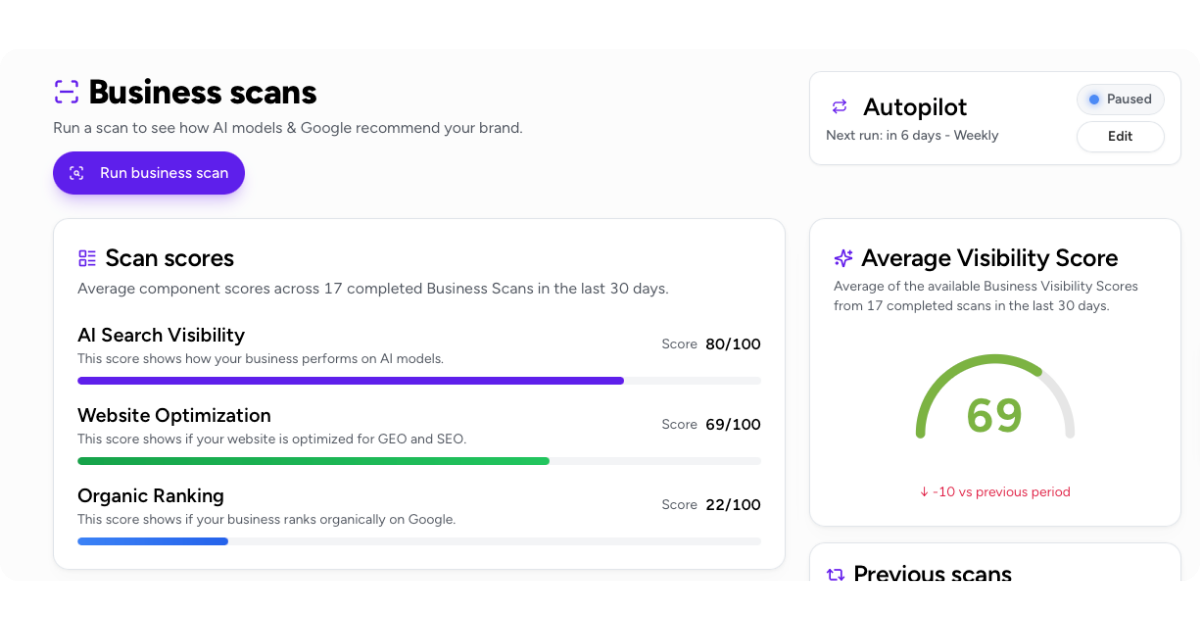
That is where a GeoSnake Business Scan can help. It checks how AI assistants describe your business and reviews website signals, then brings model-level evidence and prioritized recommendations together. It gives you a practical starting point for improvement, while your team remains in control of which changes to make.
What does “AI ready” mean for a business website?
An AI-ready website is easy to discover, clear about the business behind it, useful for the questions buyers ask, and consistent with trusted information elsewhere. Those are familiar website quality goals. They matter more when search experiences assemble answers from multiple pages and sources instead of showing only a list of links.
Google’s guidance for AI features in Search says an eligible page must be indexed and able to appear with a snippet. Google also notes that meeting the requirements does not guarantee that a page will be crawled, indexed, or shown. Bing now offers site owners an AI Performance report with citation activity and cited pages for its supported AI experiences. The useful takeaway is simple: you can improve readiness and measure some signals, but no checklist guarantees a mention.
Start with five readiness signals
Use this table to check whether your website gives search and AI systems reliable material to work with. A GeoSnake Business Scan can help surface several of these gaps alongside how AI models currently represent your business.
Readiness signal | What to check on your website | How a Business Scan helps |
Discoverability | Important pages are crawlable, indexable, linked internally, and not accidentally blocked | Highlights website and technical signals included in the scan, so you can investigate likely barriers |
Business clarity | Your name, location, services, audience, and contact details are clear and consistent | Shows how assistants describe your company and where that description differs from your intended positioning |
Useful answers | Service pages address real buyer questions with specific details, examples, and limits | Shows whether models mention relevant services and which questions may need clearer supporting pages |
Trust and evidence | Claims are supported by first-hand detail, credible references, reviews, and accurate company information | Helps you compare model answers and evidence with the information available on your site |
Ongoing measurement | You record a baseline and revisit visibility after meaningful updates | Keeps scan history so you can compare findings after changes, without treating one answer as a permanent result |
Make the site easy to find and read
Check access, indexing, and internal links
Start with the pages that drive enquiries: your main service pages, product pages, location pages, pricing, and contact page. Confirm that the pages load, return the right status, are not blocked from crawling by robots.txt or hosting rules, and are eligible for indexing. Link to them from relevant pages so they are not isolated from the rest of your site.
Google’s guidance says important content should be available as text, crawlable, and easy to find through internal links. If the page depends on text embedded in an image, a script that does not render for crawlers, or a downloadable file that is difficult to interpret, publish the key facts in accessible page text too. Structured data can clarify information when it accurately matches what visitors see, but Google says special AI schema is not required for AI Overviews or AI Mode.
Give each important page one clear job
A visitor should understand the page’s subject and next step quickly. Use a descriptive title and main heading, name the service or product plainly, and explain who it is for. Avoid vague labels such as “Solutions” when a specific label like “Payroll services for Dutch restaurants” would tell a buyer more.
Build pages around actual customer needs. A product page should explain what it does, who it suits, how it works, and its limits. A local service page should make its service area and contact options easy to find. A comparison page should show what was compared and how you reached the recommendation. Clear pages are easier for people to use and easier for systems to interpret accurately.
Keep facts consistent across your site
Review your business name, address, service areas, opening hours, phone number, product names, prices, and team details. Make sure they match across your website and important public profiles. When an assistant sees conflicting information, it may have less confidence about which detail is current. Do not make a claim on one page that another page contradicts.
Give AI systems something worth repeating
A technically accessible page can still be too generic to help a buyer. Replace broad promises with details that only your business can provide: the types of customers you serve, the process you follow, the problems you solve, the conditions that affect results, and the questions customers ask before they buy.
Use examples, original photos, product specifications, author or expert credentials, and clearly sourced facts where they help. Explain important terms in plain language. Keep marketing claims proportionate to the evidence. If you say your service is faster, safer, or more affordable, tell readers what the claim is based on and where the comparison applies.
💡Read next: 12 Best AI Search Visibility Tools for SaaS Teams in 2026
External proof matters too. Reviews, professional profiles, industry coverage, partner pages, and directories can help people verify who you are. Keep profiles current, ask satisfied customers for honest reviews, and correct inaccurate listings. Do not create fake reviews or mass-produce near-identical pages just to create more mentions. Google’s people-first content guidance emphasizes original value and reliable information over pages made mainly to manipulate rankings.
For a broader view of how search fundamentals carry into AI discovery, read GeoSnake’s guide to adapting SEO as AI search changes. A useful website is the foundation. It is not the only source that can shape an AI answer, so keep your business information and reputation consistent beyond your own domain as well.
Use a Business Scan to find the right first fixes
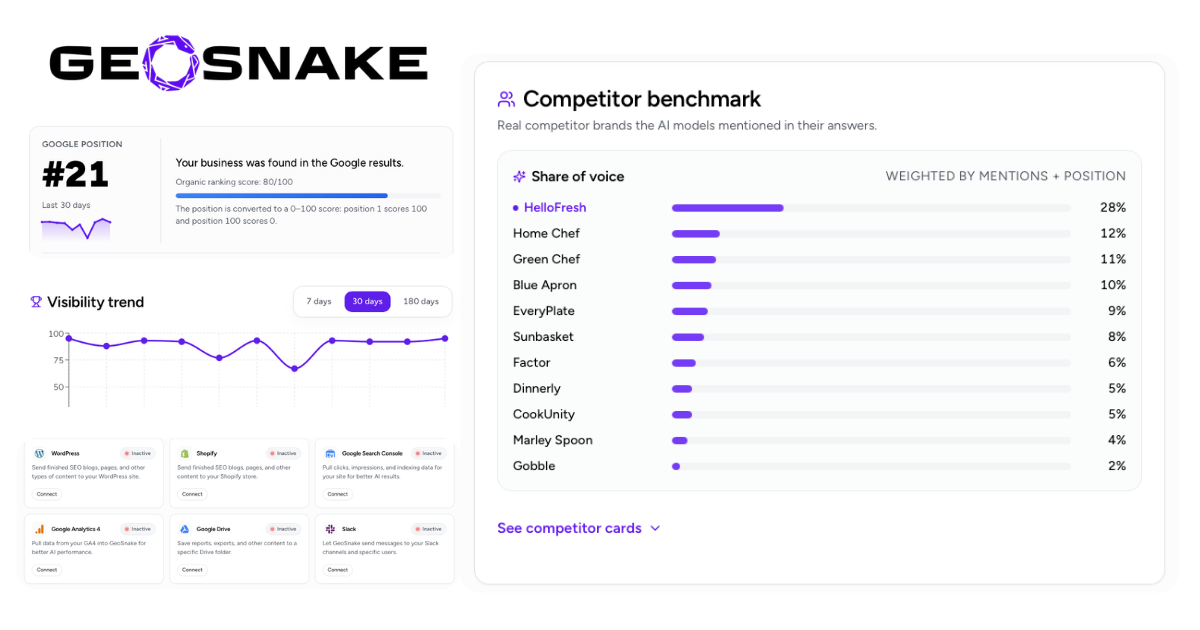
A Business Scan makes the question concrete: what are AI assistants saying about your company today, what website signals may be relevant, and where should your team investigate first? GeoSnake’s Business Scans bring together model-level scores and answer evidence, website content and technical signals where included, scan history, and prioritized recommendations.
That combination is useful because a list of technical checks alone will not tell you whether a buyer-facing answer names the right service or competitor. A model response alone will not tell you whether a page is missing, unclear, or out of date. A scan gives your team evidence to connect the two and choose a manageable next step.
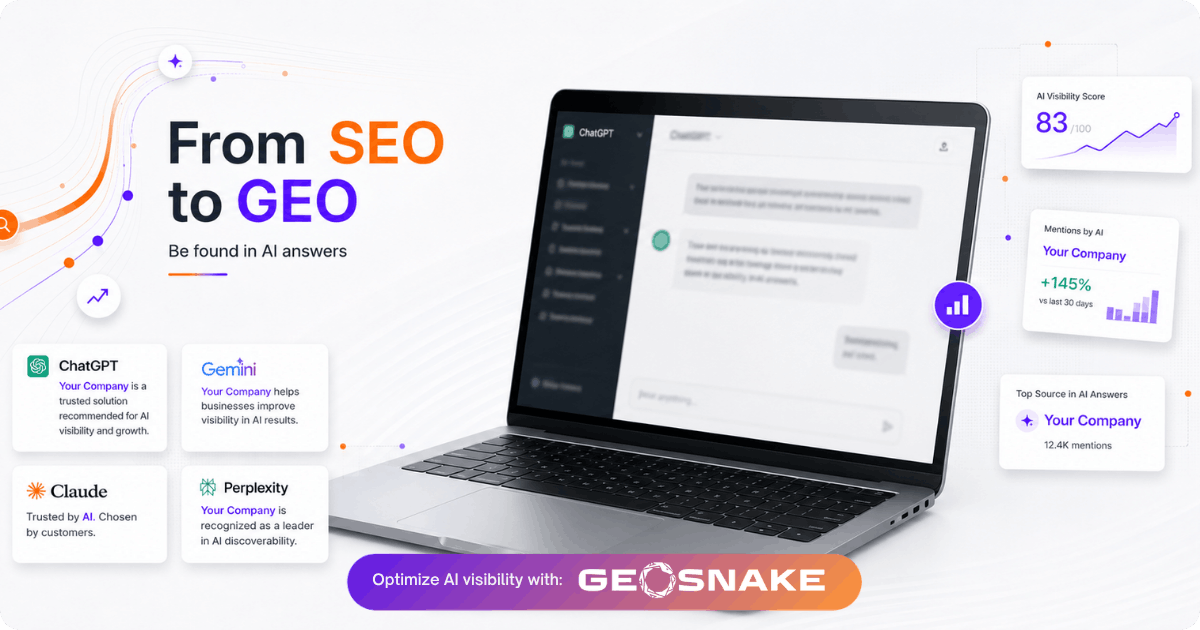
If you want an initial baseline, run a GeoSnake Business Scan. Use the results to decide which pages or business details deserve attention first. A scan is a diagnostic and planning aid; it does not make website changes automatically or guarantee that ChatGPT, Google, Gemini, or Claude will include your business.
A five-step way to make your website more AI ready
Pick the buyer questions that matter. Write down the questions people ask before choosing your service, product, or location. Include needs, comparisons, pricing, setup, and common concerns. Prioritize the questions tied to real revenue or qualified enquiries.
Check how assistants describe you now. Run a Business Scan and review the model answers, visibility by assistant, and website signals included in the report. Save the baseline. Treat responses as samples that can vary by wording, location, and time.
Fix discovery and factual gaps first. Make sure priority pages can be crawled and indexed, are linked internally, and state accurate company and offer details. Repair conflicting names, outdated pricing, missing service areas, and unclear contact information.
Improve the pages buyers need. Add specific explanations, evidence, examples, clear comparisons, and direct answers to unanswered customer questions. Keep markup accurate and aligned with visible content. Do not add special AI files or schema on the assumption that they guarantee visibility.
Recheck after meaningful updates. Record what changed and compare later scans with the baseline. Watch your normal search and website analytics too. Use Bing Webmaster Tools and Search Console for the data each service provides, and do not credit a small change to your edits without considering other causes.
Keep expectations grounded
No website can control what an AI system says. Models change, search features vary, and the same question can produce different responses. Google explicitly says inclusion is not guaranteed, even when a site meets its stated requirements. Microsoft also describes its AI citation metrics as signals about visibility, not traffic or ranking. Measurement is still valuable, but read it as evidence about a sample and a trend, not a promise of new leads.
The practical goal is to become easier to understand and trust wherever a potential customer looks. Fix pages that are hard to access. Make your services and proof specific. Keep facts current. Then check whether AI assistants are describing your business more accurately and surfacing the pages you want buyers to see.
That is the value of the GeoSnake approach: a Business Scan helps your team see how AI models currently interpret the company, connect those answers with website signals, and prioritize improvements based on evidence. Start with a GeoSnake Business Scan and turn “Is our website AI ready?” into a clear set of next steps for your team.
FAQs
Does “AI ready” mean my website will appear in AI answers?
No. Readiness means removing avoidable access and clarity problems and giving systems useful, reliable information. Google says eligibility does not guarantee that a page will be indexed or shown, and other AI systems also choose their own sources.
Do I need special schema or an AI file?
Google says no special AI schema or machine-readable file is required for AI Overviews or AI Mode. Use supported structured data when it accurately describes the visible page, and prioritize crawlability, clear content, and useful evidence.
What does a GeoSnake Business Scan tell me?
It shows how AI assistants describe and mention your business, model-level scores and answer evidence, and website signals and prioritized recommendations where included. It helps you decide what to investigate and improve first, but it does not publish changes or guarantee a particular AI result.