
 ChatGPT
 Claude
 Gemini
 Grok
ChatGPT Ads are now arriving in Europe. OpenAI announced that its advertising product would expand to 31 European markets from 24 August 2026, including Spain, France, Germany, Italy, the Netherlands, Sweden, Norway, Denmark, and Austria. Ads will initially appear to people on Free and Go plans, while Plus, Pro, and Enterprise remain ad-free. OpenAI's Europe announcement.
That creates a tempting question for every growth team: should we buy ChatGPT Ads now, or should we first make sure ChatGPT can find, understand, and recommend our business organically? The blunt answer is that paid reach can help you get attention, but it cannot replace organic visibility. If you treat ads as a shortcut to being chosen in an answer, you may pay for traffic while your brand remains weak in the exact place where trust is built.
What ChatGPT Ads can buy, and what they cannot
OpenAI says ads are clearly identified and separated from ChatGPT's answers. It also says the ads do not change the answer itself. That distinction matters. A sponsored placement may put your offer in front of a person who is already exploring a category. It does not mean ChatGPT will name your company when a user asks: “Which provider should I choose?”.
Organic visibility is the answer layer. It is the part users treat as guidance, comparison, or evidence. Paid visibility is the promotion layer. It can create a useful first touch, but the user may still ask follow-up questions, compare alternatives, open sources, and check whether your company looks credible. If your public information is thin, confusing, or impossible for search crawlers to access, the ad may create curiosity that your organic presence cannot convert.
Layer | What it can do | What to measure |
ChatGPT Ads | Buy a sponsored surface around relevant conversations. | Reach, clicks, qualified visits, conversions, cost per result. |
Organic ChatGPT visibility | Earn inclusion in answers, recommendations, and cited sources. | Mention rate, position, cited pages, accuracy, and referral traffic. |
Website evidence | Give users and crawlers clear proof of what you do and who you serve. | Indexed pages, crawl access, engagement, leads, and assisted revenue. |
The table shows why the order matters. Ads and organic visibility are related, but they are not interchangeable metrics. A click from an ad is not proof that your brand is strong in ChatGPT answers. A mention in an organic answer is not the same as a paid impression. Keep the layers separate or your reports will make expensive activity look like lasting visibility.
Why organic ChatGPT visibility can reduce wasted ad spend
There is no honest way to promise that GEO will eliminate the need for paid advertising. Some businesses need immediate demand, and ads can be a rational test. The financial case for organic optimization is different: every useful page, clear explanation, and verified source can support many future prompts without paying for each impression or click.
OpenAI's publisher guidance says any public website can appear in ChatGPT Search, and recommends allowing OAI-SearchBot so content can be discovered, summarized, cited, and linked. Its advertiser guidance separately says OAI-AdsBot is required for landing-page validation and review. That means businesses need to understand two different access questions: can OpenAI review the page you want to advertise, and can ChatGPT Search discover the broader evidence that supports your brand? OpenAI publisher FAQ OpenAI advertiser crawler guidance
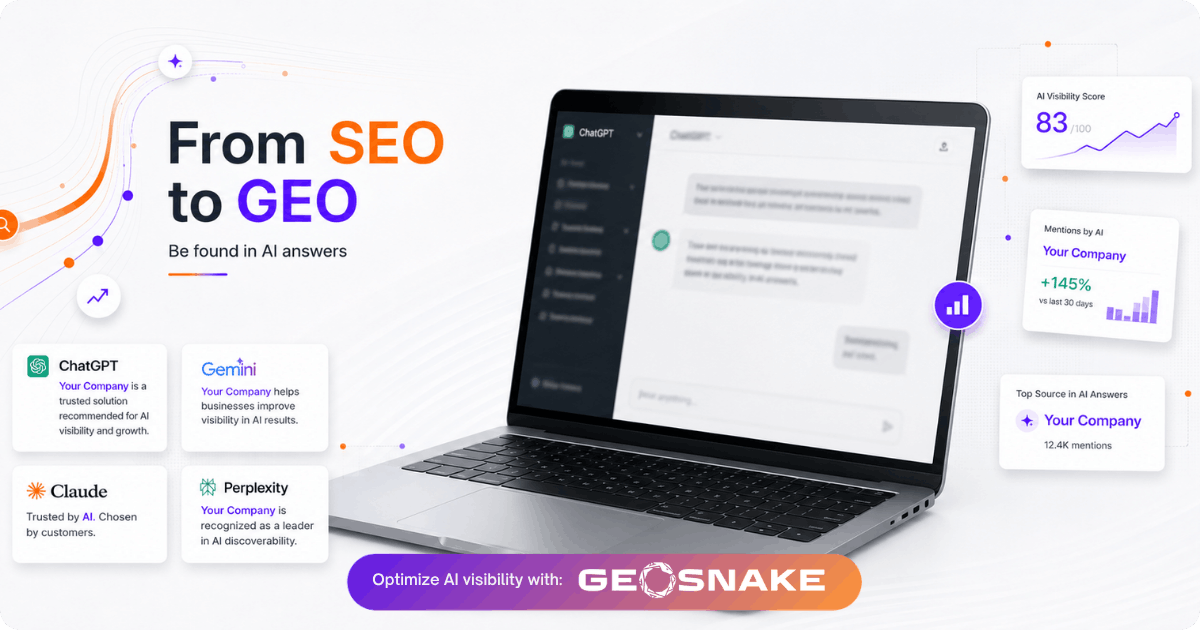
This is where a measurement tool such as GeoSnake becomes useful. You need to see whether ChatGPT mentions your business, which prompts produce a competitor instead, which sources appear in the answer, and whether the result changes by model or market. Without that baseline, a paid campaign can hide the real problem. You may be buying more visits to a brand that still loses the recommendation test.
A better order for your ChatGPT budget
Do not start with a large campaign because the platform is new. Start with evidence. The goal is to learn whether paid traffic adds incremental demand after your organic foundations are in place.
A practical order of operations
1. Check access first. Confirm that important public pages are not blocking OAI-SearchBot, and that your ad landing page can be reviewed by OAI-AdsBot. Also check your normal hosting, firewall, and robots.txt rules.
2. Define the questions that matter. Use real buyer prompts such as “best accounting software for a small agency in Spain” or “which Barcelona tour operator is good for families?” Do not measure only your brand name.
3. Fix the evidence gap. Make your products, audience, locations, prices, limits, proof, and differences easy to find in normal page text. Clear information helps people and retrieval systems.
4. Measure organic visibility before buying scale. Track mention rate, recommendation order, cited URLs, competitor presence, and referral traffic with a tool such as GeoSnake and your analytics platform.
5. Run a small paid test only after the baseline is clear. Judge it on incremental conversions and qualified traffic, not on impressions that would have happened anyway.
The real advantage is compounding evidence
A paid campaign ends when the budget ends. Organic visibility is slower and less controllable, but the assets can keep working: a clear service page, a useful comparison, a strong case study, a current business profile, and third-party sources that describe your company accurately. These assets can support Google Search, Google AI Overviews, Google AI Mode, ChatGPT Search, and other answer systems at the same time.
Google makes the same broad point in its guidance for AI features: standard SEO foundations still matter, including crawl access, internal links, useful page text, accurate structured data, and people-first content. Google's AI features guidance Organic ChatGPT work is not a magic markup trick. It is the discipline of making your business easy to verify and easy to recommend.
GeoSnake can help turn that discipline into a repeatable review. Track the prompts tied to revenue, compare your visibility with competitors, inspect the sources behind answers, and prioritize the pages most likely to change the result. See GeoSnake's AI visibility platform If ChatGPT Ads are part of your plan, use that visibility data before and after the campaign so you can tell whether paid activity created new demand or simply paid for attention you could have earned.
So, should you buy ChatGPT Ads in Europe?
Yes, if you have a clear offer, a measurable conversion path, a reviewable landing page, and enough baseline data to judge incremental impact. No, if you are hoping a sponsored placement will repair weak positioning, missing proof, or poor organic visibility. In that case, the ad is not a strategy. It is a faster way to discover that the rest of the funnel is not ready.
The smart budget split is not “ads or GEO.” It is “paid tests for immediate learning, organic visibility for durable coverage.” Start with the prompts your customers already ask. Measure the answer layer. Improve the evidence. Then spend where the data shows that paid reach adds something new. That is how European businesses can use ChatGPT Ads without becoming dependent on every future click.
Want to know whether ChatGPT can already find and recommend your business? Run an AI visibility check with GeoSnake before committing a large budget to ChatGPT Ads. You may find a cheaper growth opportunity in the organic answer layer first.
FAQs
FAQ 1: Do ChatGPT Ads change the answers ChatGPT gives?
OpenAI says its ads are clearly identified and separated from ChatGPT's answers. Businesses should still measure paid placements and organic recommendations as separate systems.
FAQ 2: Can any European business appear in ChatGPT Search organically?
Any public website can be eligible, but placement is not guaranteed. Allowing OAI-SearchBot, publishing clear evidence, and building a trusted site improve eligibility without guaranteeing a mention.
FAQ 3: Is GeoSnake a replacement for ChatGPT Ads?
No. GeoSnake measures and helps improve organic AI visibility. Ads can still be useful for controlled tests and immediate reach. The point is to know what you are buying and whether paid traffic adds incremental value.