
 ChatGPT
 Claude
 Gemini
 Grok
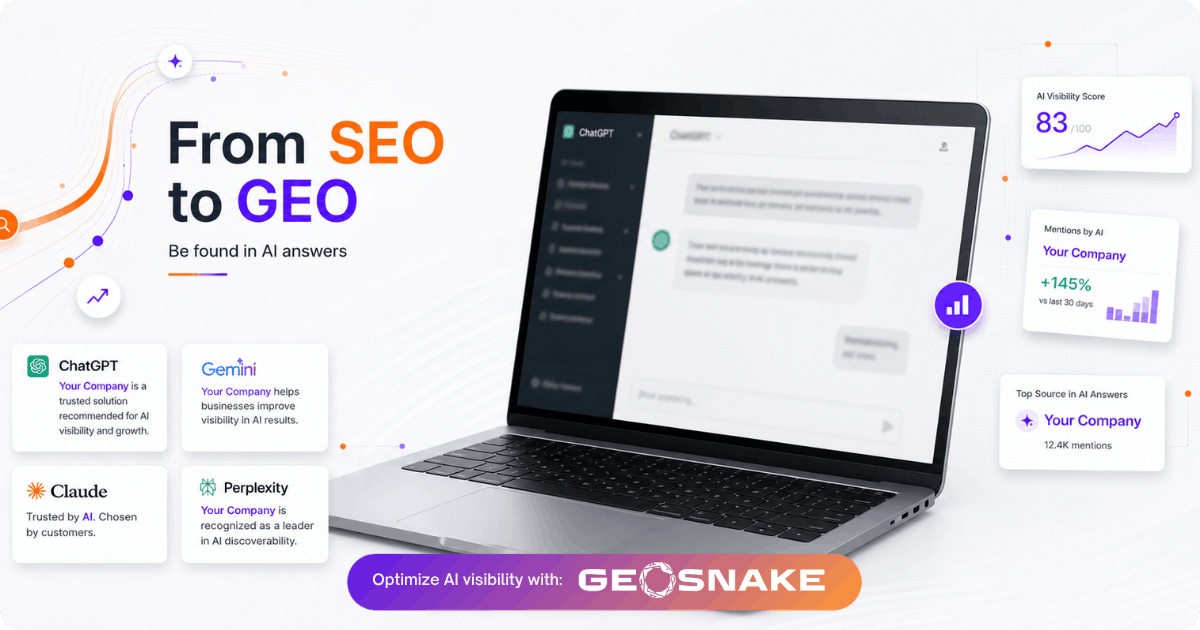
When a team adds Generative Engine Optimization, or GEO, to SEO, the old report starts to break down. Rankings still matter, but they are no longer the whole story. A page can rank well in Google and still be invisible inside ChatGPT, Google AI Mode, or other AI answers. Reporting now needs rankings, citations, mentions, and conversion data in one view.
The new job is to measure how often AI systems find, understand, and reuse your brand. OpenAI says ChatGPT Search gives timely answers with links to web sources, while Google says AI Mode uses more advanced reasoning, follow-up questions, and links to relevant content. Google also says its AI optimization guide still favors helpful, reliable, people-first content. In other words, GEO does not replace SEO. It adds a second layer of reporting on top of it.
A useful way to think about the shift is this: SEO tells you whether people can find your pages, and GEO tells you whether AI systems can understand and recommend them. The strongest reporting setup measures both, then shows how they work together.
What changes in the report?
Traditional SEO reporting centers on keyword positions, organic sessions, CTR, and conversion paths. GEO reporting adds answer-level metrics, because a model can mention your brand without sending the same kind of click signal a search result creates. That means the report needs new rows, new charts, and a different summary section.
Metric | SEO view | GEO view | What it tells you |
Visibility | Keyword rank and organic reach | Share of model visibility and AI mentions | Whether your brand appears in the places users now trust for answers. |
Authority | Backlinks, clicks, CTR | Citation count and reference rate | Whether AI answers are actually pulling your pages into the response. |
Structure | Headings and internal links | Entity coverage, schema, and semantic depth | Whether the model can parse your page cleanly and reuse it with confidence. |
Business value | Organic traffic and revenue | AI referral traffic, conversions, and sentiment | Whether AI discovery helps the team win leads, sales, and trust. |
The table above is the heart of the new structure. It keeps the old SEO baseline in place, but it also adds the GEO layer that most dashboards miss.
“Modern visibility means measuring not just where you rank, but whether AI chooses to recommend you.”
If you want a broader weekly operating rhythm, the GeoSnake post How marketers track AI visibility weekly shows how teams can turn visibility into a habit, not a one-off audit.
What should the dashboard include?
The best dashboard is not crowded. It should show a clean split between SEO health, GEO health, and the business outcome. Use one view for leadership and another view for the team doing the work.
A practical dashboard can include:
SEO baseline, including organic sessions, non-branded queries, and conversion paths.
GEO layer, including AI citations, brand mentions, and share of model visibility.
Entity layer, including schema coverage and topic completeness.
Competitor layer, showing who is cited more often and where they outperform you.
Action layer, listing the pages that need refreshes, schema work, or new supporting content.
If the team wants a quick reference for how GEO work turns into a repeatable system, the GeoSnake playbook The 2026 GEO playbook for growth teams is a good companion read.
How often should the report run?
The cadence should be mixed. Daily or weekly alerts are for sudden changes, like traffic drops, core updates, or competitor citations. Monthly reviews are for the bigger picture, like which pages rank well in search but remain weak in AI answers.
For alerting, a platform like SEOcrawl AI is a useful example because it combines AI tracking, prompt monitoring, and reporting around SEO and GEO. Reporting needs both fast alerts and slower strategy reviews so the team can react without overreacting.
That mix matters because GEO changes can be subtle. A page may hold its Google rank while losing share in AI answers. Or a competitor may start getting cited first even though your traffic looks stable. If you only watch one channel, you will miss the shift.
What actions should follow the data?
The report should never end as a spreadsheet. It should point to a short list of next actions. If a page ranks well but has weak GEO visibility, refresh the content with cleaner headings, better FAQs, stronger schema, and simpler language.
If a competitor is getting cited more often, study the structure of the pages AI is pulling from. Look for the proof points they use, the formatting they use, and the parts of the page that make the answer easier to quote. That is the kind of insight that can turn reporting into growth.
“Reports don’t drive growth. Clear actions based on real insights do.”
This is also where GeoSnake becomes useful in a very practical way. It helps teams track AI visibility, compare competitors, and turn weak spots into actions. If you want to go deeper, the GeoSnake blog hub is a good place to keep reading, and the Checklist: improve model mentions in 30 days is a nice next step if you want a faster action plan.
Bottom line
When GEO joins SEO, reporting becomes less about showing where the team ranks and more about showing how the brand gets used in answers. That means the best report combines classic organic metrics with AI citations, mentions, reference rates, and semantic depth. Teams that measure both can see the whole picture, and teams that see the whole picture can move faster.
If you want to turn that into a repeatable workflow, start with the GeoSnake homepage and use it as the layer that ties search visibility and AI visibility together.GeoSnake homepage.
FAQs
Q: Does GEO replace SEO reporting?
A: No. GEO adds a new layer on top of SEO. You still need organic traffic, keyword trends, and revenue tracking, but now you also need AI citations and brand mentions.
Q: What is the single most important GEO metric?
A: Share of model visibility is the best starting point because it shows how often AI answers include your brand across the prompts that matter most.
Q: What should the team do first if SEO is strong but GEO is weak?
A: Refresh the pages that matter most with clearer structure, stronger schema, and better FAQs. Then track the change again in the next report.