
 ChatGPT
 Claude
 Gemini
 Grok
A lot of businesses are being told to add new files, new tags, and new shortcuts to get into AI answers. Google’s newest guidance points in a much simpler direction. You do not need special machine-readable files, AI text files, or special schema just to appear in its generative AI features. What matters most is still the part many teams skip: pages that are crawlable, clear, and actually useful.
That shift matters because Google is still shaping AI search from the web, not from a closed list of brand files. In its guide to optimizing for generative AI features, Google says technical clarity and crawlable content are central to how its AI systems access pages. And in the AI Mode announcement, Google describes AI Mode as a search experience that goes further with follow-up questions and helpful web links.
What Google actually says
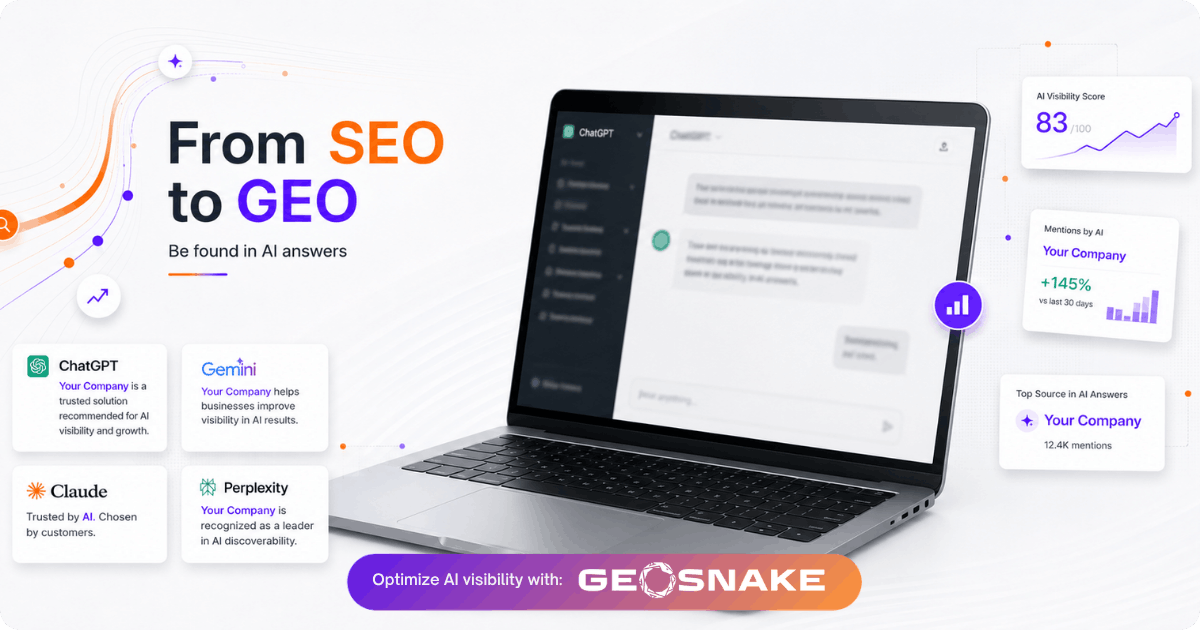
Google’s current message is not “add more hacks.” It is closer to “make the page easy to understand.” The company says its generative AI features use publicly accessible, crawlable content, and it explicitly warns against chasing gimmicks like chunking content into tiny pieces or adding unnecessary AI text files. It also says structured data can still help where it makes sense, but it is not a magic switch for AI visibility.
Myth | What Google says | Better move |
llms.txt is required | Google says Search visibility does not depend on a special AI file. | Keep pages accessible and focus on content quality. |
Chunking is the answer | Google does not tell you to split every page into tiny fragments. | Write one complete page that answers the whole question. |
Special schema will force AI citations | Structured data can help search understanding, but it is not required for generative AI features. | Use schema where it improves clarity or rich results, not as a trick. |
One test tells the full story | AI visibility can change from run to run. | Measure over time and look for patterns, not a single lucky result. |
That is a useful correction for teams that have been overfitting to the latest GEO trend. If your page is thin, confusing, or blocked from crawling, no file name is going to rescue it. If your page is useful and easy to parse, you are already closer to AI visibility than most people think.
Google’s crawler docs back that up. In the common crawlers documentation, Google says Google-Extended is for managing whether crawled content may be used for training or grounding in Gemini-related products, and that it does not affect inclusion in Google Search or ranking. That is an important distinction for anyone trying to separate AI training controls from search visibility.
The same theme shows up in Google’s helpful, reliable, people-first content guidance. The core idea is simple: make content useful for people first, and keep the technical structure clean enough that Google can find and understand it. That is not flashy, but it is the part that survives product changes.
What to do instead this week
If you are updating content for AI search, do the boring things first. They are boring because they work.
Check that your most important pages can be crawled, indexed, and loaded without friction.
Rewrite thin pages so one page answers one real business question end-to-end.
Use structured data where it adds meaning, not because you hope it will force citations.
Review whether your pages actually help a reader compare options, make a decision, or complete a task.
Measure performance over time instead of celebrating or panicking after one search.
This is where GeoSnake fits naturally. If you want to know whether your brand is actually showing up in AI answers, not just whether one query looked good on one day, start with repeatable tracking. The GeoSnake blog has a practical piece on how marketers track AI visibility weekly and another on how to benchmark AI visibility against competitors, which is the right next step once you stop chasing shortcuts.
Why measurement matters
A 2026 arXiv paper on quantifying uncertainty in AI visibility found that citation rankings move around across repeated samples and that single-run visibility metrics can be misleadingly precise. Another paper, from citation selection to citation absorption, argues that being cited is not the same as shaping the answer itself. That is a better model for GEO than any one-off checklist.
Taken together, those sources point to a simple conclusion. AI visibility is not a switch you flip with a new file type. It is a measurement problem, a content problem, and a crawlability problem. That is why GeoSnake exists. If you want a cleaner view of whether your pages appear in ChatGPT, Gemini, Claude, and Google AI search, the product is built to show those patterns over time instead of guessing from a single search result.
If you are comparing options or deciding where to spend time next, start at the GeoSnake overview here: Why GeoSnake. It explains the visibility and competitor tracking angle in plain English.
FAQs
Do I need llms.txt for Google AI search?
No. Google’s current guidance says special AI text files are not needed for Search visibility. If your pages are crawlable, helpful, and technically clean, that is a much better use of time.
Does structured data still matter?
Yes, but as a support tool, not a magic wand. Structured data can help Google understand and present content, especially for rich results, but it does not replace good writing or good crawlability.
How should I track AI visibility?
Track it over time, compare against competitors, and look at the full pattern across models and query types. If you want a practical way to do that, GeoSnake is designed for exactly this kind of weekly visibility work.