
 ChatGPT
 Claude
 Gemini
 Grok
Most teams still measure AI visibility by opening ChatGPT, asking a few questions, and saving screenshots. That is useful for a quick reality check. It is not a measurement system. Microsoft now gives site owners a more concrete option inside Bing Webmaster Tools: an AI Performance report that shows when pages from your site are cited in Microsoft Copilot, Bing AI summaries, and selected partner experiences.
That sounds like a free version of Google Search Console for AI answers. It is not. Microsoft's own AI Performance documentation says the report measures visible citation activity. It does not measure rankings, authority, or the importance of a page inside an answer. That limit is the whole point of this article.
What Bing Webmaster Tools can actually show
The report gives you a native record of how Microsoft-linked AI experiences use your content. You can see total citations over a chosen period, the number of unique pages cited, the average number of cited pages per day, the grounding queries associated with those citations, and which URLs are cited most often. The query-to-page mapping is especially useful because it connects a phrase to the page that supplied the evidence.
Microsoft's launch post calls this an early step toward more transparency between AI systems and the open web. Its later Bing Webmaster Tools help page makes the practical use clear: site owners can inspect cited pages, grounding queries, and citation trends instead of relying only on clicks or classic rankings.
Dashboard signal | What it tells you | What it does not prove |
Total citations | How often pages from your site were visibly referenced in supported AI answers. | That the citations caused traffic, leads, or a higher position. |
Grounding queries | The phrases associated with AI retrieval that led to cited content. | That these are the exact words users typed, or the complete prompt context. |
Cited pages | Which URLs are being used as evidence, and how often. | That the page is the best page, or that the model understood it correctly. |
Citation share preview | Your relative presence for a grounding query where the preview is available. | A universal share of voice across ChatGPT, Claude, Gemini, and Perplexity. |
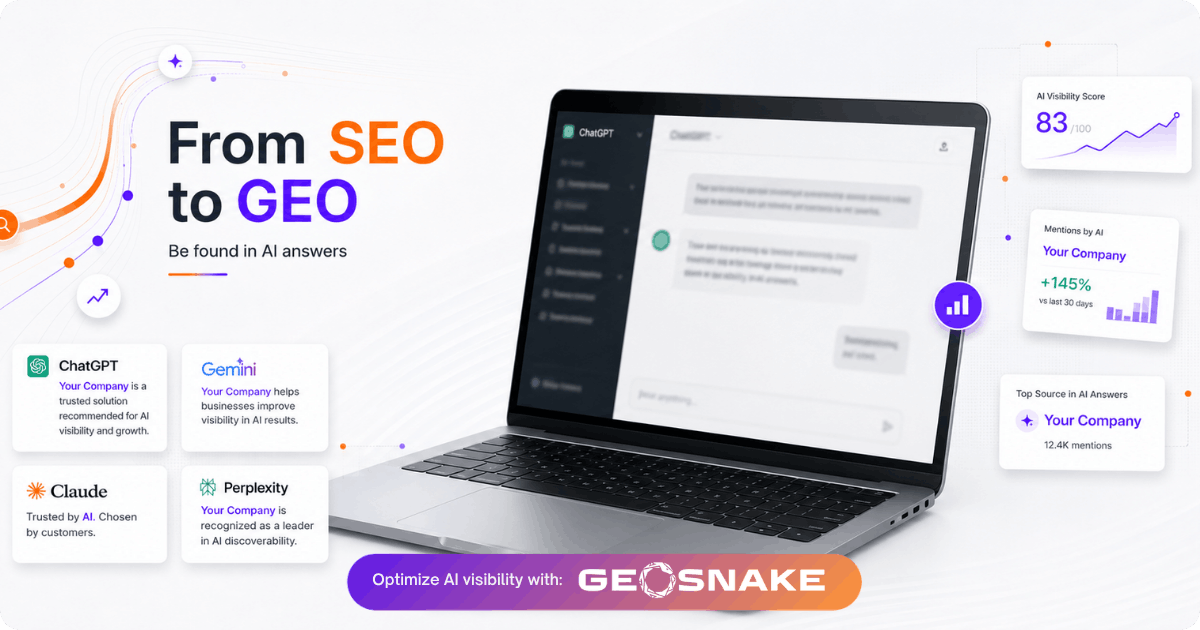
The honest interpretation is narrow but valuable: Bing gives you evidence that a supported Microsoft experience cited a specific URL for a related retrieval phrase. That is better than a guess. It is still only one window. Use a GeoSnake AI visibility scan to compare that signal with how ChatGPT, Gemini, Claude, and other systems describe or recommend the same business.
Why one native dashboard is not enough
AI search is not one channel. ChatGPT Search can use search partners and public websites. Claude has its own web search and fetch behavior. Perplexity describes a search workflow that combines multiple sources and returns citations. Gemini operates inside Google's ecosystem. A page being cited by Copilot is not proof that the same page will be retrieved by the other systems.
The platform differences are documented in the current guidance from OpenAI's ChatGPT Search help, Anthropic's web search help, and Perplexity's Pro Search guide. These pages describe capabilities and source handling. They do not promise that a citation in one system transfers to another.
There is a second problem: a citation is not the same as a correct or persuasive mention. The answer may cite a product page but describe the product badly. It may cite an old page. It may recommend a competitor while using your page for a narrow fact. If your dashboard stops at citation volume, you can end up celebrating visibility that does not help a buyer choose you.
💡Read tip: How marketers track AI visibility weekly
A practical way to use the report
Treat Bing's data as a source diagnostic, then compare it with answer-level checks. The goal is not to force every platform to cite the same URL. The goal is to learn which important buyer questions your site can support, which pages are doing the work, and where your brand is still absent or misunderstood.
Verify your site in Bing Webmaster Tools and open the AI Performance report for a 30-day baseline.
Export or record the top cited pages and grounding queries, then group them by commercial intent, local intent, product intent, and informational intent.
Run the same buyer questions in ChatGPT, Claude, Gemini, and Perplexity, recording mention, recommendation position, cited source, and factual accuracy.
Fix the highest-value gap first, then repeat the measurement after enough time has passed for crawling and retrieval to change. Do not call one good answer a ranking win.
What to fix when a page is cited but the business still loses
Start with clarity. Put the key fact in plain text near the top of the page. Name the customer, location, category, price range, limitation, and proof. Do not make a PDF, image, or vague homepage the only place where the answer exists. Then check consistency. If your site says one thing, a review profile says another, and a directory has an old address, the model has to choose between conflicting evidence.
Next, look at the query type. A page cited for 'what is this product' may not help with 'which product should I buy' or 'which company serves my city'. These are different jobs. Track them separately instead of averaging them into one comfortable number.
GeoSnake is built for that broader loop. Its Prompt Lab lets you test real buyer questions, while its visibility tracking connects model mentions, competitors, sources, and changes over time. Use Bing to understand Microsoft-linked citations, then use cross-model checks to see whether those facts travel.
💡Related: The 2026 GEO playbook for growth teams
The blunt takeaway
Bing Webmaster Tools is one of the most useful free ways to see real AI citation activity, but it is not a universal AI visibility score. It tells you what Microsoft-linked experiences cited, which page they used, and which grounding phrase was connected to it. That is enough to find content gaps. It is not enough to claim that your brand is visible everywhere.
Start with a free GeoSnake business scan to see the cross-model baseline, then use Bing's report as one measurement layer. The businesses that win will not be the ones with the biggest dashboard number. They will be the ones that know which buyer questions they own, which sources support those answers, and where competitors still appear first.
FAQs
Does Bing Webmaster Tools measure ChatGPT, Claude, or Gemini?
No. The AI Performance report covers Microsoft Copilot, Bing AI-generated summaries, and selected partner experiences. Use a cross-model tool or repeatable prompt set for ChatGPT, Claude, Gemini, and Perplexity.
Does a citation in Bing AI Performance mean my page ranks well?
No. Microsoft says the report shows citation activity, not rankings, authority, or the role of a page in an answer. A cited page may still be old, unclear, or weak for the buyer's actual decision.
What should I measure besides AI citations?
Measure whether your brand appears, whether it is described correctly, whether it is recommended for the right buyer questions, which sources are cited, and whether the result changes over time. Citation volume is one signal, not the whole outcome.