
 ChatGPT
 Claude
 Gemini
 Grok
Claude artifacts are moving from private workspaces into public web pages. That creates a new question for businesses: if you publish a useful calculator, comparison tool, or interactive guide as a Claude artifact, can it help you get found in AI search?
The short answer is yes, it can help with discovery, but no, it is not a shortcut to AI visibility. Anthropic's current artifact publishing guide says that a published artifact is public and can be viewed and used by anyone with the link. Recent reporting also found public Claude artifacts indexed by Google after they had been shared where search engines could see them. The important word is public, not ranked.
What changed with public Claude artifacts
A Claude artifact is a standalone app, tool, visualization, or piece of content created inside Claude. When you publish it on a Free, Pro, or Max plan, Anthropic says anyone with the link can view and interact with it. You can also embed a published artifact on another website. Team and Enterprise sharing is different: those artifacts stay inside the organization.
That makes an artifact a real public web asset, not just a file inside a chat. Axios reported that public Claude artifacts were showing up in Google results only after users had shared them somewhere a search engine could see, such as a forum or social post. Anthropic said it does not provide chat directories or sitemaps to search engines. In other words, publishing makes a page accessible, while distribution helps it become discoverable.
Artifact move | What it tells you | What it does not prove |
Publish an artifact | Creates a public, interactive URL that people can view and use. | That ChatGPT, Claude, Gemini, or Perplexity will recommend it. |
Embed an artifact | Puts the tool inside a page you control and can explain with normal HTML. | That the embedded experience is the source an AI system will cite. |
Share the link | Gives search engines and people a path to discover the public asset. | That a share on one forum creates lasting authority or trust. |
Track the asset | Lets you test whether the tool is mentioned, cited, or used in buyer answers. | That one indexed page equals broad AI visibility. |
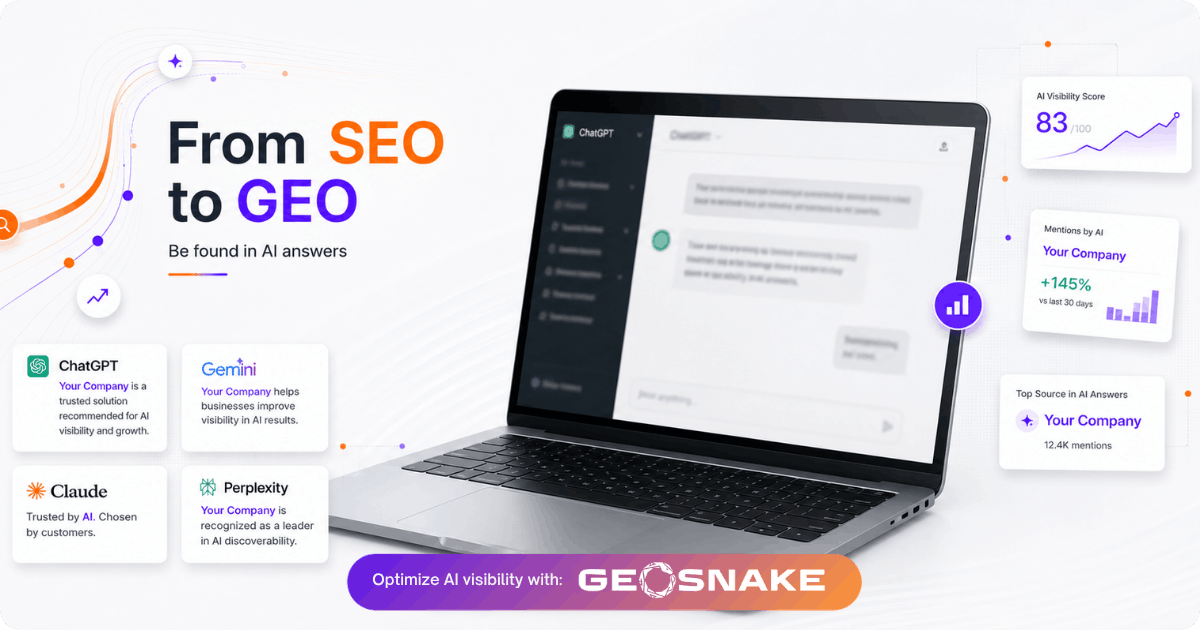
The best use case is a tool that supports a real buyer question, such as a pricing calculator, a location finder, a product comparison, or a readiness check. Publish the interactive version if it is genuinely useful, but keep the important facts in plain HTML on your own site. A GeoSnake AI visibility scan can then show whether the business is being mentioned and recommended across models, not just whether one public URL exists.
Why a public URL is not an AI ranking strategy
AI search systems do not share one index or one scoring rule. OpenAI says ChatGPT Search ranking uses several factors for reliable and relevant information and that no one can guarantee top placement. It also says sites should allow OAI-SearchBot to crawl them if they want to be included. Anthropic says Claude web search processes multiple live sources and returns citations. Perplexity says its updated Deep Research browses more sources and reaches harder-to-find pages. Those are different retrieval paths.
That means an artifact can be indexed and still fail the buyer test. It may not answer the exact prompt. It may not explain who the product is for. It may be missing price, location, limits, proof, or a stable description. It can also be cited for one narrow fact while a competitor gets the recommendation. Public access is a technical condition. It is not authority.
💡Read tip: Can AI search read the facts hidden in PDFs and images?
How to use Claude artifacts without fooling yourself
Treat the artifact as one supporting asset in a broader evidence system. The goal is not to manufacture more public URLs. The goal is to make the right answer easy to retrieve, easy to verify, and consistent across the sources a buyer and an AI system may use.
Choose one buyer problem the artifact solves, and write the answer in plain language on a page you own.
Publish the artifact only after removing private prompts, customer data, internal plans, hidden URLs, and claims you cannot support.
Share the public link where the right audience already looks, then connect it to your canonical page with a clear explanation and source links.
Run the same buyer questions in ChatGPT, Claude, Gemini, and Perplexity, recording mention, recommendation position, cited source, and factual accuracy.
The privacy and ownership problem
The biggest risk is not that a public artifact fails to rank. It is that a team publishes something it thought was a private handoff. Axios found public artifacts containing business plans, infrastructure diagrams, and planning documents. Anthropic's help page also warns that viewers of a shared Team or Enterprise artifact can gain access to attachments and files in the conversation that created it. If the asset includes sensitive material, do not publish it as a growth experiment.
There is also an ownership problem. A published artifact can be copied and customized by other Claude users. That is useful for distribution, but it means the artifact should not be your only copy of a proprietary method, dataset, or product logic. Keep the canonical explanation, evidence, and conversion path on infrastructure you control.
GeoSnake is built for the broader loop. Its Prompt Lab lets you test real buyer questions, while its visibility tracking connects model mentions, competitors, sources, and changes over time. Use it to check whether the useful fact travels beyond the Claude artifact and into the buyer answers that matter.
💡Related: Why do ChatGPT, Claude, Gemini, and Perplexity cite different sources?
The blunt takeaway
A public Claude artifact can help your business get discovered, especially when it solves a real problem and people share it in the right places. But it does not create AI authority by itself. The public URL is only the door. Your business still needs clear facts, independent evidence, crawlable pages, and a consistent answer across the models your customers use.
Start with a free GeoSnake business scan to see your cross-model baseline before you publish another asset. The businesses that win will not be the ones with the most public AI pages. They will be the ones whose important facts are easy for both buyers and AI systems to find, understand, and verify.
FAQs
Will publishing a Claude artifact guarantee AI search visibility?
No. Publishing makes the artifact public, but each AI system decides what it retrieves, cites, or recommends. A public page is a technical prerequisite for discovery, not a ranking guarantee.
Should I use a public Claude artifact instead of my own website?
No. Use the artifact as an interactive supplement. Keep the core facts, evidence, policies, and conversion path on a website you control so other systems can retrieve and verify them.
What should I measure after publishing one?
Measure whether the right buyer questions produce a correct mention, recommendation, and citation across ChatGPT, Claude, Gemini, and Perplexity. Also track where the traffic and assisted conversions come from. An indexed page alone is not an outcome.